The Jury
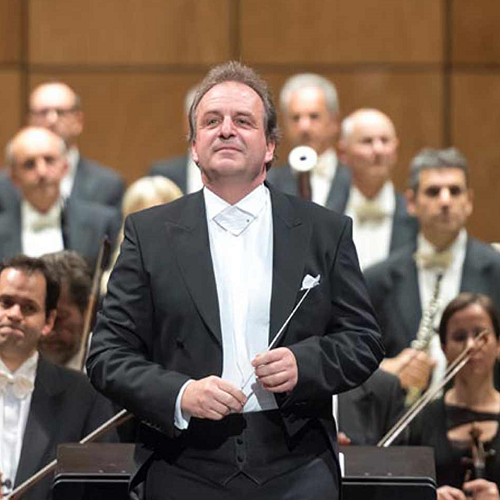
György G. Ráth
György G. Ráth is among the few conductors who is familiar with the worlds of operas, oratories and symphonic music as well. His broad repertoire embraces classical music from Bach to Bartók, operas from Mozart through Verdi and Puccini to Janacek.
As music director of the Hungarian State Opera he created the first 3D performance of an opera in the world: Béla Bartók’s Bluebird’s Castle. He managed the Opera House over the past 15 years. He was the 10th chairman-conductor of the Budapest Philharmonic Society Orchestra when he conducted — for the first time after the composer Mahler — his Symphonic poem in two parts, thought lost for a long time. He himself reconstructed the work from the existing manuscripts, for which he was granted the Doctor Liberalium Artium title from the University of Pécs.
In his career he has been a regular guest conductor of orchestras such as the Rundfunk-Sinfonieorchester Berlin, Saint Petersburg Philharmonic, RTL Orchestra in Luxemburg, Antwerp Philharmonic Orchestra, Chile National Philharmonic Orchestra, Toscanini Philharmonic in Parma, Sophia Philharmonic, Auckland Philharmonic, Taipei Symphony Orchestra, Teatro Colón in Buenos Aires, the Hamburg Staatsoper, the Lyric Theater in Chicago, the Teatro la Fenice in Venice, the opera houses in Rome and Nice, Seville Royal Philharmonics and Seoul Philharmonic.
He has also been appointed Principal Guest Conductor of prestigious orchestras such as the RAI Italian Radio Television Symphony Orchestra, Zagreb Philharmonic Orchestra, and Seville Royal Philharmonic.
György G. Ráth regularly teaches young musicians. He wrote a book on the art of conducting, drawing on his personal experience and studies under László Somogyi, Ervin Lukács, Franco Ferrara, Leonard Bernstein, Seiji Ozawa, Kurt Masur and Karl Österreicher. Today he represents perfectly the legacy of the great Hungarian conductors — from Arthur Nikisch and Hans Swarowsky through George Szell, Sándor Végh, Antal Dorati and Sir George Solti.
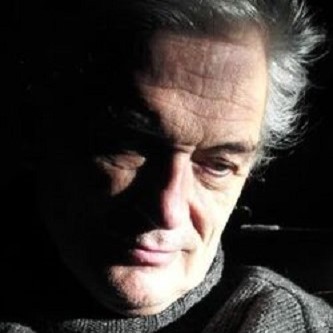
Prof. Csíky Boldizsár
Romania
Csíky Boldizsár, Hungarian composer, teacher, and musicologist, was born on October 3, 1937, in Târgu Mureș. He studied at the Bolyai Farkas High School (1954) and the School of Arts (1955) in Târgu Mureș. In 1961 he graduated from the Gheorghe Dima Conservatory of Music in Cluj.
Between 1961 and 1990 he served as artistic secretary of the Târgu Mureș State Philharmonic, then between 1990 and 1997 as its director, and from 1997 to 2000 as advisor. From 2006 to 2013 he was professor of harmony, counterpoint, musical form, and chamber music at the Faculty of Music Education of the University of Arts in Târgu Mureș.
He has been a member of the Union of Composers and Musicologists of Romania since 1968 and a member of the Association of Hungarian Composers since 1994. His studies, critiques, and interviews have been published in Romanian and Hungarian professional journals. He has conducted research on the history of musical life in Târgu Mureș.
Among his orchestral works is an adaptation of the historical songs of Tinódi Lantos Sebestyén; his vocal-symphonic work The Torchbearers; and the cantata October. His chamber opera Görög Ilona is based on a ballad. His artistic identity is strongly tied to folk-inspired works including folk-song suites, Csángó and Sălaj dance suites, and choral pieces.
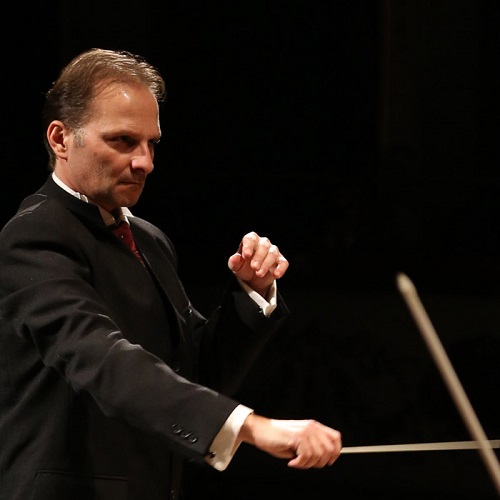
David Crescenzi
A pianist, orchestra conductor, and choir master, David Crescenzi began his studies at the Conservatory in Fermo, later earning diplomas in Wind Band Instrumentation, Choral Music, and Choral Conducting from the Conservatory in Pesaro. For several years, he served as assistant and collaborator to Alessio Vlad and was a student of Gustav Khun.
Among his most notable engagements is his collaboration with the Cairo Opera House (Egypt); as a guest conductor between 1998 and 2003, he led performances of Rossini’s Il barbiere di Siviglia, Donizetti’s L’elisir d’amore, Puccini’s Tosca, and Verdi’s Un ballo in maschera.
From 1999 to 2001 he worked as assistant chorus master at Teatro Carlo Felice in Genoa, and in the same position at Teatro San Carlo in Naples during the 2004/2005 season. Since 2008 he has been a guest conductor of the Romanian National Opera in Cluj-Napoca, and since 2017 he has served as its artistic director.
His more recent appearances include Musikverein Vienna (2022), Düsseldorf (Figaro, 2023; I Capuleti e i Montecchi, 2024), Bucharest (Don Carlo, May 2024), Iași (Turandot, June 2024), and Sala Verdi in Milan (January 2025). He collaborates regularly with the Philharmonics of Cluj and Bucharest.
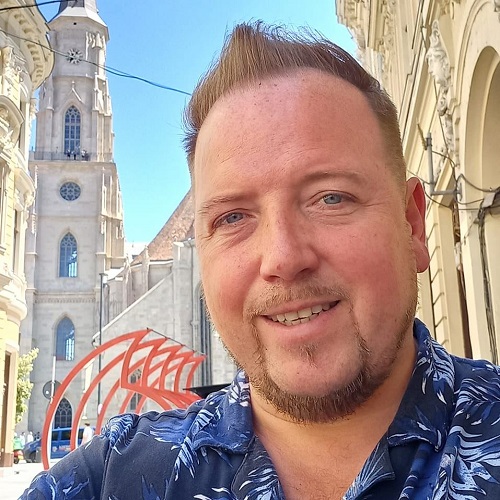
Levente György
Levente György, the manager of the Târgu Mureș State Philharmonic, studied double bass at the “Gheorghe Dima” Music Academy in Cluj (1995–2000), and later, beginning in 2011, continued his training in Switzerland as a Pro Basso scholarship recipient.
As a vocal artist and opera soloist, he trained at the Hochschule der Künste in Bern (in the class of Professor Elisabeth Glauser) and the Schweizer Operastudio. He later pursued studies in orchestral conducting at the Hochschule für Musik und Theater in Zurich under the guidance of Marc Kissoczy, earning his conducting diploma.
He made his debut at the Swiss Biel-Solothurn Theatre, where he was a guest soloist for five years, and between 2011 and 2020 he was a soloist with the Theater für Niedersachsen in Hildesheim (Germany). His repertoire includes more than 40 roles from operas and operettas by composers such as Mozart, Beethoven, Donizetti, Verdi, Wagner, Smetana, J. Strauss, Offenbach, Puccini, Ravel, and Martinů.
Starting in 2005, he received a scholarship from the Tonkünstlerverein in Lausanne, and after winning the Migros Kulturprozent vocal competition in Zurich, he was awarded another year-long study grant.

Laurențiu Muntean
Laurențiu Muntean is a Romanian musician, orchestra conductor, and cultural manager most widely known for his role as the manager of the Filarmonica de Stat Arad (the Arad State Philharmonic) in Romania.
Born in Deva, Romania, Muntean pursued formal musical education at the Academia de Muzică “Gheorghe Dima” in Cluj-Napoca, graduating in orchestra conducting and completing a master’s degree there. He worked extensively in music education and performance, including as a conductor and teacher at music colleges in Timișoara and Arad.
In February 2023, Muntean was officially appointed manager of the Filarmonica de Stat Arad, one of Romania’s key regional philharmonic institutions. As a conductor and artistic leader, he has led a wide range of performances — from classical masterworks like Carmina Burana to innovative “pop-simfonic” concerts that bridge classical and contemporary repertoire.
Muntean is known for his vision of making orchestral music more accessible to diverse audiences, discussing his desire to “rethink the elitist approach” to classical music — opening philharmonic programming to broader publics and younger generations without compromising artistic quality.
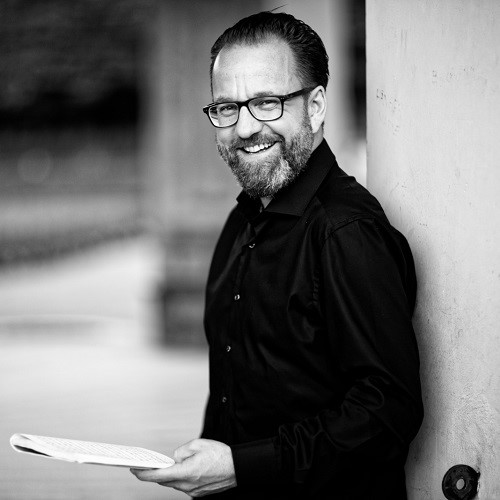
Franz Schottky
Franz Schottky is Chief Conductor and Artistic Director of the Munich Kammerphilharmonie dacapo, which he founded in 2000. With its own full-season subscription concert series in the Herkules Hall, the orchestra has secured a large core audience and a permanent place in the rich cultural life of Bavaria’s state capital, becoming a popular guest orchestra in Germany and abroad.
For the Austrian label Gramola, Schottky and his orchestra recorded a CD with works by Haydn together with violinist Thomas Albertus Irnberger, which was nominated for the Preis der Deutschen Schallplattenkritik (German LP Critics’ Award).
Franz Schottky has been invited regularly to conduct all over the world as a guest of the Jerusalem Symphony Orchestra, Orchestra dell’Arena di Verona, Orchestra Sinfonica di Sanremo, Moravian Philharmonic Orchestra Olomouc, Capella Cracoviensis, and the Orquesta Sinfónica del Estado de México. He has performed in venues such as Musikverein Vienna, Smetana Hall Prague, Liszt Academy Budapest, and Gasteig Munich.
Schottky has shown particular dedication to the symphonic works of Anton Bruckner — conducting first performances of the 4th Symphony in Nur-Sultan, and the 6th Symphony in Kharkiv and Chișinău. His special conducting technique stems from his studies with Sergiu Celibidache; at the age of 20 in 1991, Schottky became one of Celibidache’s last and closest students. Since 2014, he has been a jury member of the Verona International Piano Competition.